Because the first Pahlavi Shah banned the use of the hijab, many women determined to indicate their favor of Khomeini by carrying a chador, thinking this would be the best way to indicate their help with out being vocal. Women took part in the Iranian revolution by collaborating in protests. Organizations supportive of the Islamic Revolution, such as Mujahideen, welcomed women into their organization and gave them essential tasks. Khomeini also inspired women to take part in the protest against the Shah. Iranian women performed a major role within the Persian Constitutional Revolution of 1905–eleven.
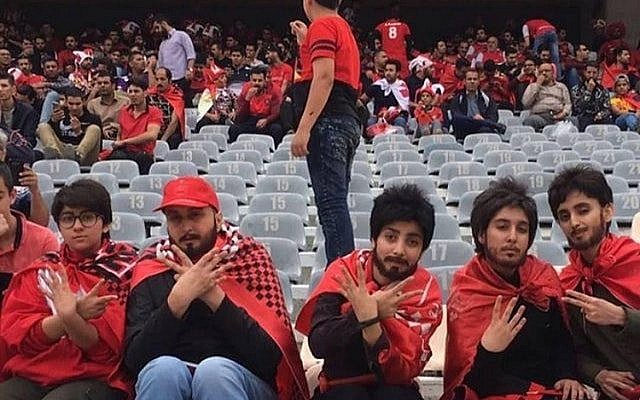
The FIFA president described their presence as “great progress”, but activists decried it as a “show” to please the worldwide visitor as the ban was reimposed straight after his departure. But Iranian activists have long expressed disappointment with FIFA over their perceived failure to force change regardless of a variety of petitions. And now, some concern the Iran-Cambodia match could turn right into a publicity stunt to sedate worldwide strain in the wake of Khodayari’s dying before the ban is launched once more. Blatter later said that in a gathering with Iranian President Hassan Rouhani during his Tehran visit, he urged him “to consider that half of the nation who cannot attend the match”.
Biden calls on US to ease Iran sanctions, help with coronavirus pandemic
After the 1979 Islamic revolution, Khomeini mentioned, “Women have the right to intervene in politics. It is their responsibility, Islam is a political religion”. The pointers have been adjusted with “Iranian and Islamic values”. With the rise of Ayatollah Khomeini, women’s roles were limited;[citation wanted] they were inspired to lift large households and tend to family duties. Khomeini believed this to be the most important role women could pursue. Khomeini’s perception led to the closing of ladies’s facilities, childcare facilities and the abolition of household planning initiatives.
Shahrnush Pârsipur turned well-liked in the 1980s following the publication of her short stories. Her 1990 novel, Zanân mattressûn-e Mardân (Women Without Men), addressed problems with sexuality and identity.
Moniru Ravânipur’s work features a collection of short tales, Kanizu (The Female Slave), and her novel Ahl-e gharq (The People of Gharq). Ravânipur is known for her give attention to rituals, customs and traditions of coastal life. In June 2018, Iranian human rights lawyer Nasrin Sotoudeh, who represented women arrested for eradicating their headscarves, was arrested and sentenced to 38 years in prison and 148 lashes for national safety-related offences. She is among the seven human rights lawyers arrested in Iran in 2018.
Legal rights history
In 1992, the High Council of the Integration Revolution adopted a set of Employment Policies for girls, that encouraged the interrogation of girls into the labor force while sill emphasising the importance of family roles for girls. Women have been encouraged to enter gynecology, pharmacology, midwifery, and laboratory work. Although they continued to be prevented from certain professors as ‘Islamically-inappropriate’. In 1990 the field of regulation was open to women and so they had been permitted within the Special Civic Courts, though they can’t function judges. The thought behind the exhibition is to offer the artists the right publicity they deserve and to create something that corrects this distorted image of Iran and Iranian women as a result of they’re often portrayed as oppressed.

The exhibit, titled Inner Fragments, consists of work, animations, videography installations, photography, and small sculptures. About 20 Irish women attended a World Cup qualifier in 2001, and four iranian mail order brides years later a couple of dozen Iranian women had been allowed to look at the nationwide team play Bahrain.
Iranian women posted photos of themselves wearing white headscarves or pieces of white clothing online underneath the hashtag #WhiteWednesday to make their voices heard. But as an alternative of engaging with them, authorities clamped down on the peaceable activists. Fortunately, overseas women usually are not often judged as harshly as Iranian women when it comes to hejab, and few Iranians will bat an eyelid if you have your fringe or a bit of neck or hair exhibiting. It pays to take a look at what women around you are wearing; for example, you’ll need to dress more conservatively in Qom than you’d in Tehran. The struggle towards obligatory headscarves first made headlines in December 2017 when a girl climbed atop a utility box in Tehran’s Revolution Street, waving her hijab on a stick.
Notable Iranian women
In Iran, women’s rights have modified according to the form of government ruling the country and attitudes in the direction of women’s rights to freedom and self-willpower have modified frequently. With the rise of every authorities, a collection of mandates for girls’s rights have affected a broad range of points, from voting rights to decorate code. Iranian women have performed an important role in gaining worldwide recognition for Iranian artwork and particularly Iranian cinema.
Because the federal government desires Iran’s population to grow, it’s even shifting to ban voluntary medical procedures women can bear to avoid changing into pregnant. Women’s rights are severely restricted in Iran, to the purpose the place women are even forbidden from watching men’s sports activities in stadiums. A social media movement in 2017 led to women in Iran removing the compulsory Islamic headband. It was Soleimani who in 2017 tried to disgrace Iran’s bareheaded women again beneath their scarves.
Following the Iranian revolution of 1979, Iranian authorities imposed a mandatory gown code requiring all women to wear the hijab. Activists are involved that support for the Iranian individuals might end up being forgotten in President Trump’s quest to barter a settlement with Iran. There are few international organizations that totally embrace the Islamic Republic of Iran as a member.
According to Iran-HRM, in late-November 2018, a prison warden in Qarchak women jail in Varamin close to Tehran attacked and bit three Dervish spiritual minority prisoners after they demanded the return of confiscated belongings again. During the first three parliaments after the 1979 revolution, three of the 268 seats—1.5%—have been held by women. Since then, women’s presence in parliament has doubled to 3.3% of the seats. The women in parliament have ratified 35 payments concerning women’s points. As of 2006, women’s labor-pressure participation rates was at 12.6% in rural areas with a nationwide price of 12.5% whereas the rate for men is 66.1%.
Women in Iran had beforehand been restricted to the private sphere, which incorporates the care of the house and the kids, they’ve been restricted from mobility, they usually needed their husband’s permission so as to acquire a job. Employers depict women as much less dependable in the workforce versus men. However, the Islamic Revolution had some affect in changing this notion. Secular feminists and the elite weren’t proud of the revolution, whereas different feminists similar to Roksana Bahramitash argue that the revolution did deliver women into the public sphere.
Women in Iran need America’s help. Why won’t we give it to them?
Islamic politics, human rights and girls’s claims for equality in Iran. In 2006 Anousheh Ansari, a girl whose family fled the country after the 1979 revolution, grew to become the first Iranian woman in space. The feat, undertaken in Kazakhstan, was reportedly an inspiration to many Iranian women. In current years, the Iranian government has invested in women’s organizations and activist initiatives that search to empower women to be taught skills that give women more independence.